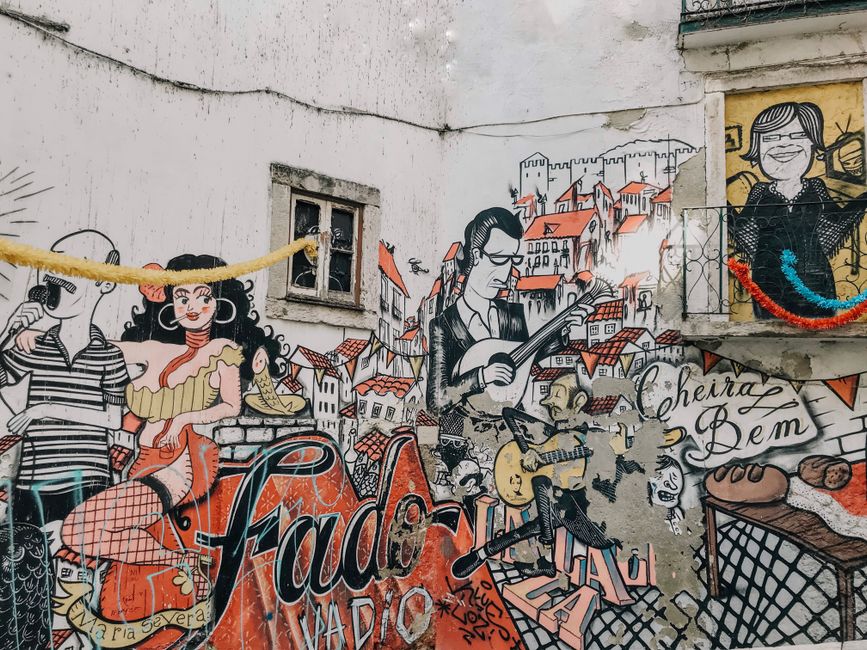
Fado
Experience the soulful depths of Portuguese tradition through Fado.
As night falls in Alfama, the narrow streets hum with life, the air thick with the scent of grilled sardines and the low murmur of conversations. You can hear it before you see it: a melancholic wail, pulling you like a moth to a flame. It’s the sound of Fado, a traditional Portuguese music genre that speaks directly to the soul, where longing, love, and loss intertwine like the tresses of a dark-haired singer lost in her song.
Picture a dimly lit tavern, where the walls are adorned with faded photographs of past performers, and the tables are lined with patrons sipping on velvety red wine. The spotlight falls on a lone figure, guitar in hand, supported by the steady rhythm of the Portuguese guitarra, its hollow body resonating with bittersweet harmonies. Each note lingers in the air, heavy with emotion, as the singer’s voice rises, quivering with the weight of stories that may never be fully told.

Fado is rooted in Lisbon’s very essence, tracing back to the early 19th century, yet it feels timeless, echoing the heartbeats of those who have come before. Often, it’s said that Fado is not merely music but a reflection of the Portuguese spirit itself—saudade, that profound sense of longing for something or someone lost. In these moments, you realize that it is the pain of absence that gives rise to the beauty of the song.
The intimacy of Fado is palpable; it’s not just performed, it’s lived. You can hear the clink of glasses and the soft shuffle of feet, the audience enraptured, each person lost in their own visceral memory as the music washes over them. As you sip your drink, you feel the warmth of a shared sorrow, a collective embrace of nostalgia that lingers long after the last note fades.
Outside, the cobblestones glisten under the streetlights, and you step back into the cool night, the echoes of Fado still resonating in your heart, a haunting reminder of the raw beauty that lies within the pain of existence.