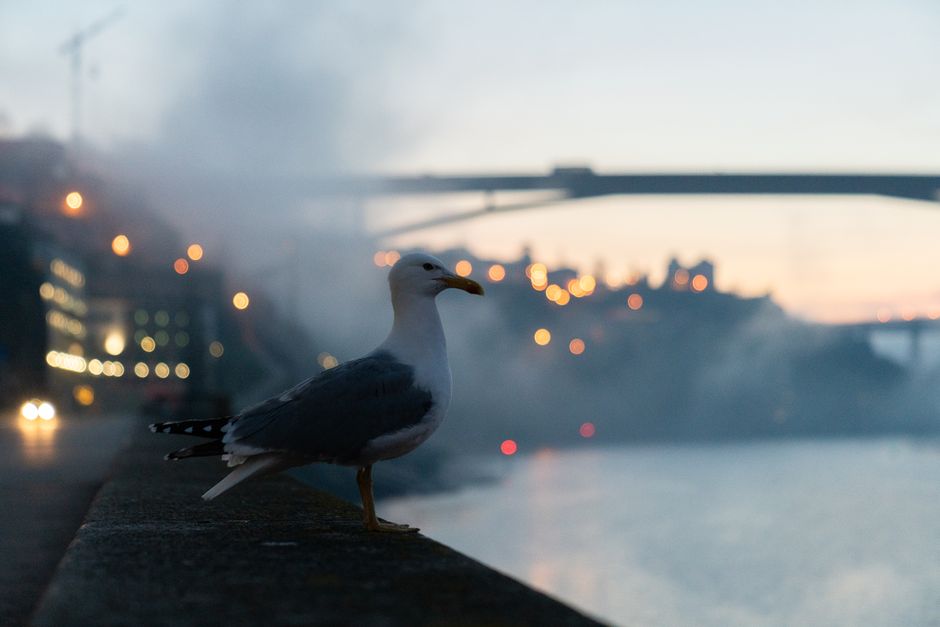
Gaivota
A playful glimpse into the life of seagulls along Porto's vibrant waterfront.
There’s a moment, suspended between the clinking of coffee cups and the distant roar of the Atlantic, when a gaivota lifts off from a weathered stone pier. Its wings, a soft gray with hints of white, spread wide against the cerulean sky, and for a heartbeat, the world holds its breath as it soars. This is no ordinary bird; it’s a sentry of the sea, an embodiment of freedom and mischief, flitting effortlessly over the bustling crowds at Cais da Ribeira, where the riverbanks pulse with life.
As I sit in a small café, the aroma of fresh pasteis de nata wafting through the air, I can’t help but chuckle at a gaivota that swoops down, snagging a crumb dropped by a distracted tourist. It’s a scene so common here that it feels like an unwritten rule: never let your guard down when eating near the water’s edge. The gaivota caws triumphantly, a sound that mingles with the laughter and chatter that fills the air—a symphony of life along the waterfront.
These birds, with their raucous personalities, have become icons of Porto’s coast. They are not just scavengers but part of a larger dialogue between the city and the sea. The word gaivota itself has roots in the Latin gavia, linking them to a lineage of coastal life that stretches back centuries. You can feel their presence in the salty breeze, in the way they flirt with the waves, diving playfully, always on the lookout for a chance to seize a snack. For locals, they are companions of the tides, sometimes annoying, often endearing.
As the sun lowers toward the horizon, casting a warm golden glow over the river, a flock of gaivota wheel overhead, their silhouettes carving shapes against the dying light. This dance is a reminder that life, like the tide, ebbs and flows, and even the most chaotic moments can bring joy. The gaivota is not just a bird here; it’s a symbol of the spirit of Porto, forever soaring, forever searching, echoing the laughter of life along the vibrant waterfront.