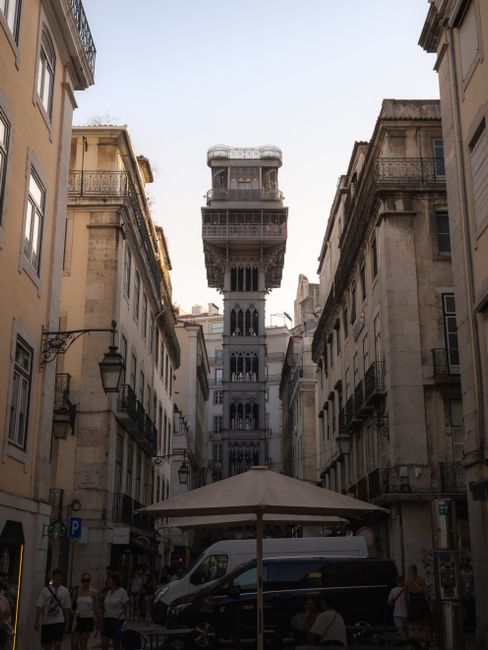
Elevador
Discover the charm of Lisbon's urban lifts, especially the iconic Santa Justa Elevator.
As you stand at the foot of the Elevador, the neo-Gothic silhouette looms against the azure sky, ornate ironwork glinting in the sunlight. The air buzzes with the chatter of tourists and the occasional screech of tram wheels on cobbled streets below. There’s a promise here, a vertical journey that seems to defy the very hills of Lisbon.
Climbing into the Elevador, the old wood paneled doors creak shut, and you feel a collective gasp of anticipation from your fellow passengers. Suddenly, the carriage jerks and ascends. You can almost taste the history; it’s layered in the warm wooden interior and the gentle whirr of the mechanism above. Through the small, oval windows, the city unfolds beneath you like a three-dimensional tapestry: terracotta roofs, the glimmering Tagus River, and the distant castles. Each floor brings a new perspective, a fresh intersection of life. You can hear laughter from a nearby terrace and the faint scent of grilled sardines wafts up, an olfactory invitation to explore the streets that wobble around the hilltop.
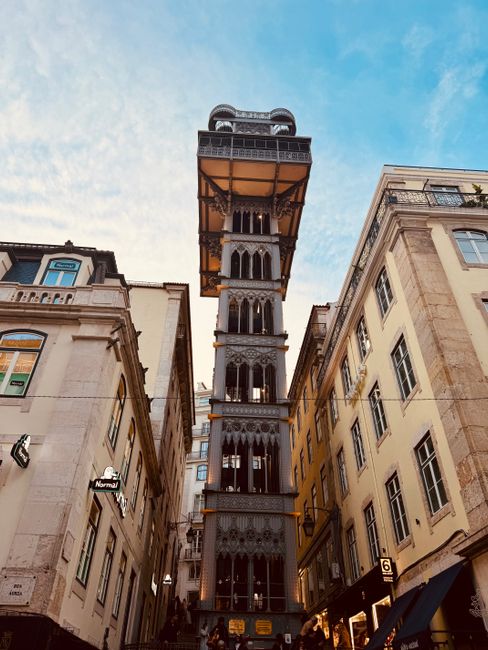
Originally built in the early 20th century, this Elevador was designed by a student of Gustave Eiffel, a nod to the grandiosity that influenced so much of urban architecture at the time. But it’s not just a lift; it’s a meeting point, a portal where locals and tourists unite under the shade of its towering presence. The ride is brief, but it leaves behind a lingering curiosity—what lies beyond the next corner, the next street?
As the Elevador reaches its peak, you step out into a new realm of views, your heart racing with the thrill of the ascent. Here, the world opens up, revealing the myriad lanes of Bairro Alto, where laughter mingles with the hushed whispers of the past. You can't help but feel a small sparkle of connection; the Elevador has not just lifted you physically but has also elevated your spirit, inviting you to wander deeper into the labyrinthine beauty of the city.